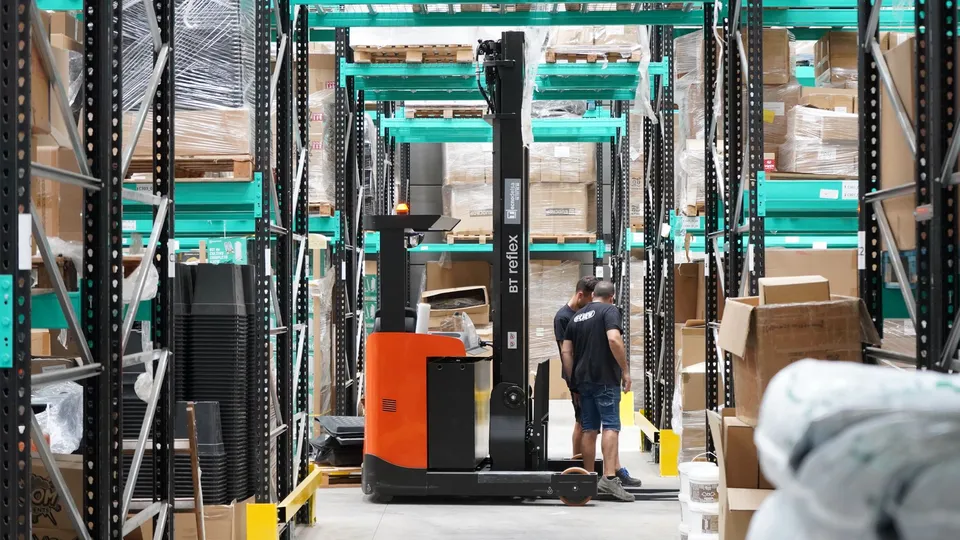
A warehouse résumé that shows forklift experience can still miss the mark. OSHA requires employer training and evaluation before anyone operates a powered industrial truck, and that evaluation must be repeated after refresher training and at least every three years. That is a small example of a larger truth on the industrial floor: a title, a résumé bullet, and actual readiness are three different things. A machinist, a maintenance mechanic, a quality inspector, a material handler, and a first-line supervisor all touch different tools, risks, and decisions. The federal wage data reflect those differences too: in May 2025, production occupations had a median annual wage of $51,600, machinists $58,750, industrial machinery mechanics $64,100, and first-line supervisors of production and operating workers $76,600.
Why experience is not the same as authorization
Industrial hiring works better when employers separate three questions: Has this person done similar work before? Has this person been trained on this site? Has this person been authorized to work independently here?
Those answers are not interchangeable. OSHA’s powered industrial truck standard is a clear example because it does not treat general driving experience as enough. The employer must train and evaluate the operator, and the evaluation is not a one-time event. It must be repeated after refresher training and at least every three years. That means a candidate may be experienced, but still not ready to be assigned the truck on day one. The same logic applies across industrial work: a worker may have done warehouse labor, but still need site-specific training before operating equipment or entering a different hazard zone.
That distinction matters even more when staffing agencies and host employers are both involved. OSHA says staffing agencies and host employers share responsibility for safety and health, including training, hazard communication, and recordkeeping. In practice, that means the person who recruited the worker may not be the person who controls the machine, line, or hazard the worker will face. When onboarding is rushed, the safest assumption is not that prior experience covers the new site, but that it still needs to be checked and documented.
The job family matters more than the title
Industrial titles often sound similar while the work underneath them is very different. BLS and O*NET describe machinists as workers who set up and operate machine tools, make precision parts, and may program equipment to perform production tasks. That is not the same thing as generic assembly. Assembly is usually closer to repeatable build work, while machining adds setup, measurement, and process control.
Maintenance work is different again. Federal occupational descriptions show maintenance and repair workers inspecting, operating, and testing machinery to diagnose malfunctions, while also handling preventive maintenance and a mix of mechanical, electrical, welding, machining, pipe-fitting, and HVAC-related tasks. That breadth means a maintenance title can hide real depth: one person may be strong on alignment and mechanical troubleshooting, another on controls or refrigeration, and a third on building systems. Employers should screen for the actual systems and tasks, not just the word maintenance.
Quality control is its own function, not a backup assignment. BLS says quality control inspectors examine products and materials for defects or deviations from specifications, and about 64 percent of those jobs are in manufacturing. That tells employers something important: inspection is not just production with extra attention. It is a distinct role with different judgment, different pace, and often different shift patterns.
First-line supervisors have a different job again. Federal descriptions say they plan work schedules, train employees, inspect materials and equipment, and resolve attendance or production problems. In other words, the supervisor’s work is coordination and accountability, not simply being the most experienced operator on the floor. That role is also where many task boundaries get enforced in real time.
What employers should ask before making an offer
The best industrial screening questions are task questions, not title questions. Instead of asking whether someone has worked in manufacturing, ask what machines they set up, what materials they handled, what tolerances they held, what defects they caught, what preventive maintenance they performed, and what shift pattern they actually worked.
That approach helps employers avoid two common mistakes. The first is over-crediting a general background that never included the real task. The second is under-crediting adjacent experience that would transfer well if the employer made the boundaries clear. A person who has run a line may be ready for a quality role with the right coaching. A person who has worked maintenance in a plant may be strong on troubleshooting but need site-specific authorization before taking on a different system. The point is not to narrow the funnel. The point is to match the work to the worker with fewer assumptions.
Employers should also separate training from authorization. Apprenticeship.gov describes registered apprenticeship as paid work with a mentor, classroom instruction, and progressive wage increases tied to a credential. That model is useful even for employers who do not run a formal apprenticeship, because it shows what workers respond to: a visible path, not just a starting wage. If a role needs a longer runway, say so early and spell out the steps. If a role is immediate but narrow, say that too. Clarity protects both the schedule and the employee experience.
What workers should ask before accepting a role
Applicants benefit from the same clarity. Before saying yes, ask three practical questions: What am I actually doing on this site? What training happens before I work independently? What does advancement look like if I do well?
Those questions matter because industrial work often mixes physical demands, shift work, and equipment-specific authorization. A role may sound broad, but the actual assignment may be narrow and repetitive. Another role may sound narrow, but include more decision-making, troubleshooting, or progression potential than the title suggests. Workers should also ask whether the job includes overtime, weekend shifts, temperature exposure, or other conditions that affect endurance and scheduling. Those details are not side notes; they are part of the job.
For workers who want a longer runway, registered apprenticeship is worth asking about because it pairs paid experience with instruction and wage growth. For workers who want a faster start, a direct-hire or temporary assignment may still be a good step if the site is clear about the task boundaries and the training path. The key is to know which arrangement you are entering and what that arrangement actually promises.
The simplest test of a strong industrial hiring process
A strong process can answer this question in one sentence: What exactly will this person do, what training will they receive, and what are they authorized to do on day one?
If that answer is clear, employers reduce avoidable turnover, workers make better decisions, and supervisors spend less time correcting mismatched expectations. If it is vague, the job title may still attract interest, but the work will likely disappoint someone. In industrial employment, clarity is not paperwork. It is part of the work itself.
If you are hiring, write the role in task language before you post it. If you are job hunting, compare the real tasks, shift pattern, and training path to your own experience before you accept. For a closer look at employer and job seeker resources, see Employers and Job Seekers.