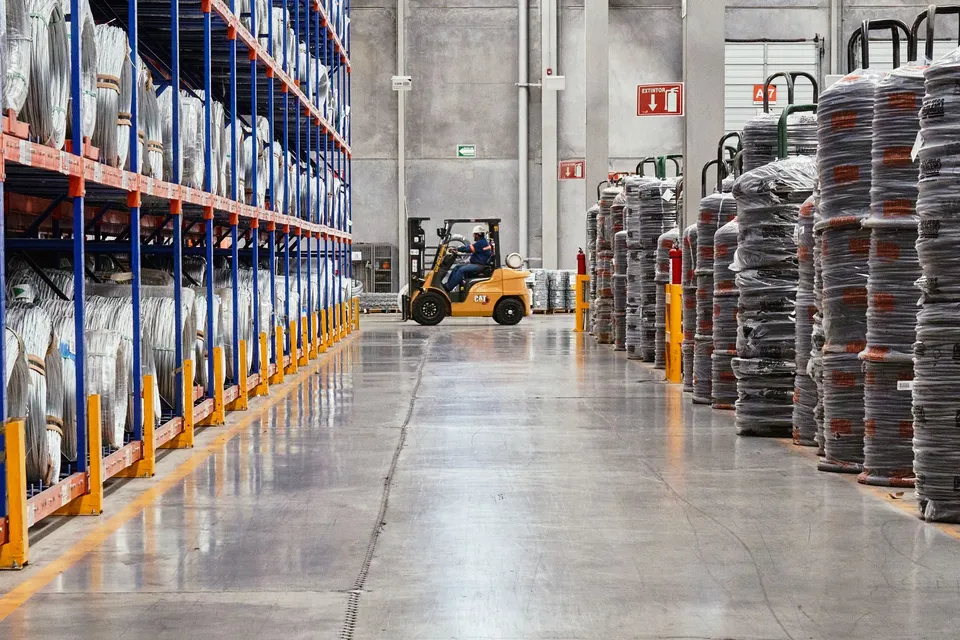
On a plant floor, industrial experience is not one thing. A person can be good at repeating the same build step all day, good at setting up a machine for the next run, good at diagnosing why equipment drifted out of spec, or good at handling a truck or tool only after site-specific training says they are cleared to do it. Employers and applicants both get into trouble when those layers get blended together.
The federal data make the difference visible. In the latest May 2025 wage tables, assemblers and fabricators were around $47,740 median pay, machinists around $58,750, industrial machinery mechanics around $64,100, and first-line supervisors of production workers around $76,600. Those are all industrial jobs, but they are not the same job family, and the pay spread reflects different levels of judgment, responsibility, and authorization.
Four layers of industrial experience
A useful way to read a resume or job description is to ask which layer it describes:
- Doing the work: repeating a line task, packing, assembling, loading, or inspecting to a standard.
- Setting up the work: changing tools, adjusting machine parameters, preparing a line, or getting the next run ready.
- Troubleshooting the work: noticing variation, diagnosing a fault, and helping correct a machine, material, or process problem.
- Being authorized for the work: having the site-specific training and evaluation that lets a person use a truck, machine, or process independently.
That fourth layer matters more than many resumes admit. OSHA says powered industrial truck operation requires employer training and evaluation before operation, and the evaluation must be repeated at least every three years and after refresher training. In other words, a worker may have broad warehouse experience and still not be cleared on a specific truck, load type, or site hazard. OSHA even warns that general driving ability is not the same as safe forklift operation. OSHA powered industrial truck guidance
Why setup is not the same as production
This is where many hiring conversations go sideways. A worker who has run parts on a line has real value, but that does not automatically mean the person can set up the equipment for the next order. Machinists, for example, do not just run a machine; they set up and operate machine tools, and may also program equipment to perform production tasks. That is a different level of responsibility from basic assembly, because setup requires a stronger grasp of tolerances, tooling, measurement, and sequence. BLS machinist profile
For employers, that means the interview should not stop at a title match. Ask what the person actually did on the floor. Did they only load parts, or did they also change tooling? Did they follow a preset, or did they confirm dimensions and adjust a run? Did they watch a machine, or did they prepare it for a changeover? Those answers tell you whether the candidate can step into a production seat, a setup seat, or both.
Why maintenance is a separate skill family
Maintenance is its own world again. Federal occupational data describe industrial machinery mechanics as workers who inspect, operate, or test machinery to diagnose malfunctions, and who may do preventive maintenance on drives, motors, belts, and filters. That is broader than fixing one machine problem after another. It involves pattern recognition, cross-craft troubleshooting, and knowing when a symptom points to a mechanical issue, an electrical issue, or a process issue. Industrial machinery mechanic profile
That is also why a maintenance background should not be treated as a blanket substitute for production experience. A worker may be excellent at repairs and still need time to learn the pace, handoffs, and quality checkpoints of a high-output line. The reverse is true as well: a strong operator may understand line rhythm and product flow but not be ready to diagnose why a piece of equipment keeps tripping after changeover.
Supervisors are not just top operators
Another common mistake is assuming the best operator automatically becomes the best supervisor. The federal job description for production supervisors makes the role more complicated than that. Supervisors plan schedules, assign work, inspect materials and equipment, keep attendance records, and train workers or assign training to experienced employees. That is coordination work, not simply more of the same production task. Production supervisor profile
This matters for retention too. When a supervisor understands the layers of industrial experience, the team can move faster without pretending everyone can do everything. The floor becomes clearer: who is authorized, who is learning, who can set up, who can troubleshoot, and who should be pulled in when the schedule slips.
What applicants should say, and what employers should ask
For applicants, the strongest industrial resume is specific. Instead of saying only that you worked in manufacturing or warehousing, say whether you:
- ran production only,
- helped with changeovers or setup,
- checked quality,
- used a powered industrial truck,
- performed basic troubleshooting, or
- supported maintenance.
That language helps a hiring manager see your actual level of readiness.
For employers, a better screen is to separate skill, setup, and authorization in the job order. If the role needs a worker who can load parts, say that. If it needs someone who can set up equipment, say that too. If the role requires fork truck clearance, make it clear that site-specific training and evaluation are part of the process, not implied by previous experience. OSHA’s temporary worker guidance also reminds host employers and staffing agencies to coordinate training and hazard communication rather than assume one side handled everything. OSHA temporary worker guidance
A second useful fact is that industrial progression can be structured. Apprenticeship.gov defines registered apprenticeship as paid work with a mentor, progressive wage increases, classroom instruction, and a portable credential. That is useful even for employers that do not run an apprenticeship themselves, because it shows the basic shape of a good industrial growth path: learn, document, advance, and earn more as responsibility grows. Apprenticeship.gov careers page
The practical takeaway is simple: do not hire, interview, or describe industrial work as if every role is interchangeable. The person who loads product, the person who sets up the machine, the person who fixes the machine, and the person who signs off on the schedule are solving different problems. When employers make those differences visible, they make better placements. When applicants explain their real layer of experience, they get matched more accurately.
If you are hiring, start by writing the task list, the setup work, and the authorization requirements separately, then review the employer page. If you are job hunting, compare your experience against the actual work layers and check the job seeker page or call 218-WorkNow to talk through fit.