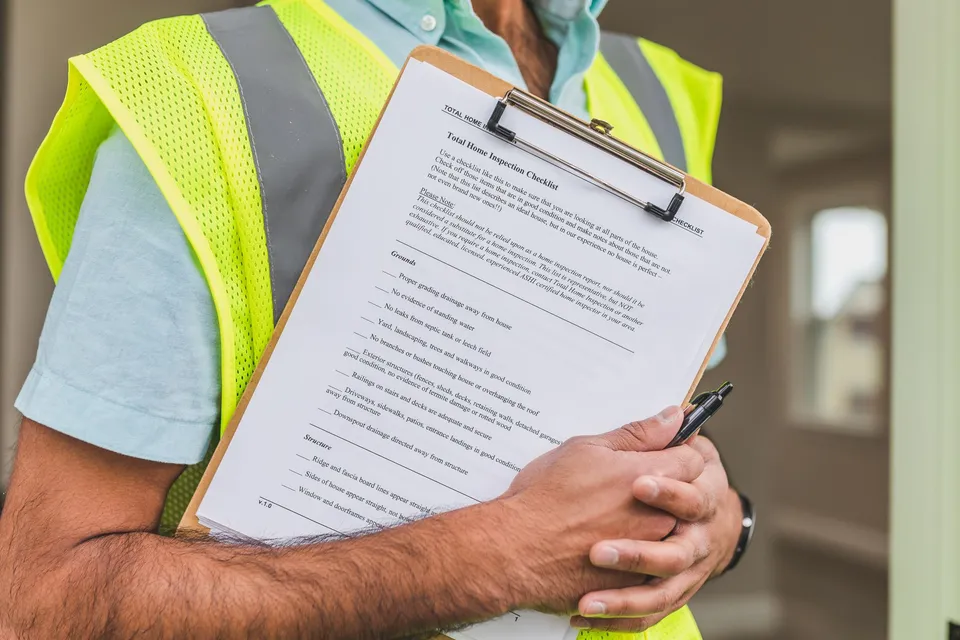
Industrial work often looks short on people when the deeper problem is a bad handoff. A plant can have every badge filled and still lose time if the shift does not know which machine is down, which order is on hold, who is cleared to run which equipment, and who owns the next step. Federal job descriptions make that clear: production supervisors plan schedules, assign production sequences, keep attendance records, inspect materials and equipment, and train workers or assign training to experienced employees . That is not clerical work. It is the control point that keeps the floor from turning into a set of isolated tasks.
Maintenance shows why the handoff matters so much. Maintenance and repair workers do not simply fix what is broken after the fact; they inspect, operate, or test machinery to diagnose malfunctions, and preventive maintenance on drives, motors, belts, and filters is part of the work itself . If production keeps running without telling maintenance about vibration, drift, or an odd alarm, the next breakdown looks sudden even when the warning signs were already there. If maintenance changes a component without telling production what changed, the next shift may spend an hour chasing a problem that is already solved. In other words, a strong industrial team is not just a group of skilled people. It is a group that shares the same picture of the machine.
The roles are different for a reason
One common mistake is to treat all floor jobs as interchangeable. They are not. A machinist may set up machine tools, operate them, and in some cases program equipment to perform production tasks . A quality control inspector is doing something else entirely: examining products and materials for defects or deviations from specifications, a role that is concentrated in manufacturing and often works nonstandard shifts . A material handler may move product, but that does not make the person automatically ready to run a powered industrial truck. Each role has its own boundary, its own pace, and its own authorization.
That distinction matters for employers because it affects scheduling, training, and risk. It also matters for employees because it changes what counts as real progress. An assembler who learns inspection has not become a machinist. A warehouse worker who gets comfortable around lift trucks has not yet been evaluated on the actual truck, the actual load, and the actual hazards of the site. The more clearly a company names those steps, the easier it is for workers to see where they stand and what comes next.
Three handoffs that keep a shift from slipping
1) Production to maintenance
This is the handoff between running and diagnosing. Production sees the symptom first: a noisy bearing, a line that keeps tripping, a conveyor that drifts out of alignment, or a changeover that suddenly takes longer. Maintenance sees the pattern: whether the issue points to wear, contamination, alignment, or a part that is simply past its service window. When those two views are not shared quickly, the line loses time, and the repair often becomes bigger than it needed to be.
2) Staffing to authorization
Temporary staffing is a good example of why a good handoff has to be explicit. OSHA says staffing agencies and host employers share responsibility for safety and health, including training, hazard communication, and recordkeeping, and temporary workers are entitled to the same protections as other employees . That means a general work history is not enough by itself. The host employer still has to explain site hazards, and the staffing partner still has to help make sure the worker understands what is expected.
3) Experience to equipment clearance
Powered industrial trucks deserve special attention because they show the difference between experience and authorization. OSHA requires employer training and evaluation before a worker operates a truck, and the evaluation has to be repeated at least every three years and after refresher training . A worker may have driven similar equipment elsewhere and still need site-specific evaluation here. That is not red tape. It is how employers make sure the truck, the load, the traffic pattern, and the workplace rules all match the person using the machine.
What workers feel when the handoff is weak
When handoffs are sloppy, employees feel it as confusion, rework, and fatigue. NIOSH notes that fatigue is commonly associated with night shifts and extended work hours, and it can slow reaction time, reduce attention and concentration, limit short-term memory, and impair judgment . NIOSH also explains that ergonomics is the design of work to fit worker capabilities, and that musculoskeletal disorders can arise from forceful exertion, repetition, lifting, vibration, and awkward postures . In practical terms, that means a bad handoff is not just inconvenient. It can make a job feel heavier, faster, and less predictable than it really should be.
That is why workers notice whether a shift starts with a real conversation or a shrug. Did the outgoing team leave the machine in a known state? Did someone mark the quality hold? Is the next person cleared for that forklift, that line, or that changeover? Is the supervisor giving a task, or handing off a problem without context? Those details shape whether the shift feels manageable or chaotic.
What a better handoff looks like
A solid industrial handoff does not need fancy software. It needs a few clear answers:
- What is running, what is stopped, and why?
- What did maintenance inspect, repair, or schedule next?
- Which parts are on hold because quality has questions?
- Who is trained and authorized on each machine or truck?
- What changed on this shift that the next team must know?
Those questions sound simple, but they are what separate a staffed operation from a coordinated one. They also help both employers and applicants judge a role more honestly. A job is not just the title on the posting. It is the set of handoffs, authorizations, and responsibilities that follow once the shift starts.
If you are hiring, the next useful step is to map those handoffs before you write the schedule. If you are job hunting, ask about them before you accept the offer. You can also review the employer and job-seeker pages at industrialstaffingmn.com/employers.html and industrialstaffingmn.com/job-seekers.html to start the conversation with the right details.