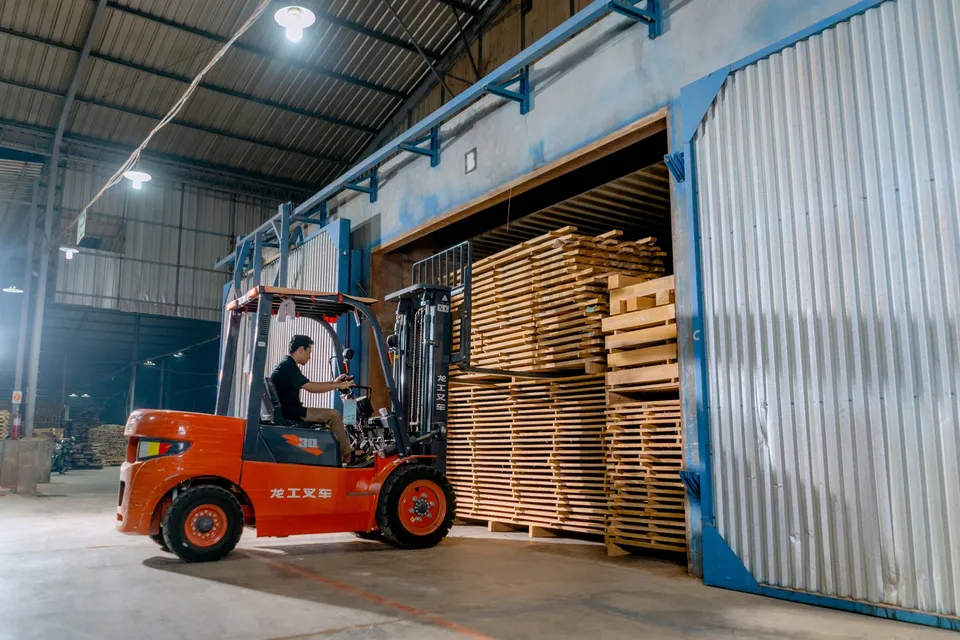
Two workers can have the same title and still be qualified for very different work. In industrial settings, the more useful question is not whether someone has ever worked in a warehouse, on a line, or in maintenance. It is what that person was actually cleared to do at the last site, and what the new site expects on day one. OSHA’s guidance on temporary workers says staffing agencies and host employers share responsibility for safety and health, and OSHA’s powered industrial truck materials require training and evaluation before operation. That makes authorization a real workplace boundary, not just a resume detail.
Experience helps, but authorization decides
Industrial work is full of jobs that sound broader than they are. A machinist is not just someone who has been near machines; O*NET describes machinists as workers who set up and operate machine tools, and who may program equipment to perform production tasks. Maintenance workers, meanwhile, may have to troubleshoot across several craft areas, while welders, inspectors, and material handlers each carry their own task boundaries. Those distinctions matter because a title can hide a lot of work that is not interchangeable.
That is why a worker with adjacent experience may still need site-specific clearance. OSHA’s powered industrial truck guidance is a good example: being able to drive a car does not mean someone is ready to operate a forklift, and prior warehouse experience does not automatically cover the actual truck, load type, or traffic pattern on the new floor. The rule is not there to slow down hiring. It exists because the workplace, not the title, determines what safe performance looks like.
What employers should define before the first shift
For employers, the biggest mistake is treating coverage as a headcount problem instead of a task-boundary problem. Production supervisors do more than fill holes in the schedule. Federal role descriptions say they plan work schedules, assign production sequences, keep attendance records, inspect materials and equipment, and train workers or assign training to experienced employees. In other words, they decide who is where, who is cleared for what, and what happens when a machine, material flow, or attendance issue breaks the plan.
That means a useful job description should name the actual work, not just the job family. If the role includes setup, say so. If it includes operation but not troubleshooting, say so. If it includes maintenance support but not independent repair, say so. If the role touches a powered industrial truck, say which truck and what authorization is required. Clear boundaries do not reduce flexibility; they keep flexibility from becoming confusion.
Temporary staffing works best when the handoff is explicit
Industrial employers often rely on temporary or temp-to-hire labor for coverage, ramp-ups, shutdowns, and vacation holes. OSHA’s temporary-worker guidance is clear that this arrangement does not dilute safety responsibilities. The staffing agency and the host employer are jointly responsible, and the host employer is often the one best positioned to explain site-specific hazards. OSHA also says temporary workers have the same protections as other employees and may report injuries or hazards.
That matters because a worker can arrive with plenty of general experience and still miss the details that are unique to the site: where traffic flows, what alarms mean, which lockout steps apply, how product moves, or what kind of lift truck is used. When onboarding is rushed, the risk is not just a safety gap. It is also a performance gap, because people cannot do well what they have not been clearly taught.
Progression is easier to trust when it is visible
Industrial work becomes more attractive when workers can see how they grow. Apprenticeship.gov defines registered apprenticeship as paid work experience with a mentor, progressive wage increases, classroom instruction tied to the job, and a portable credential. Even if a company is not a formal apprenticeship sponsor, it can borrow that logic: start with basic clearance, add supervised practice, then expand the worker’s authority step by step.
The pay data show why that progression matters. In May 2025, production occupations had a median annual wage of $51,600, first-line supervisors of production and operating workers were at $76,600, machinists were at $58,750, and industrial machinery mechanics, machinery maintenance workers, and millwrights were at $64,100. The message is simple: the market pays more when the job includes more judgment, more coordination, and more responsibility.
For workers, that means the real career question is not just what the starting wage is. It is what skills unlock the next wage step. A good employer should be able to say how a person moves from helper to independent operator, from operator to cross-trained worker, or from cross-trained worker to lead.
What applicants should ask before saying yes
Before accepting an industrial role, ask four plain questions:
- What exact tasks am I cleared to do on day one?
- What equipment, truck, line, or process requires extra training?
- Who provides the site-specific training and who documents it?
- What work leads to the next raise or the next level of authorization?
If the shift includes nights or extended hours, it is also worth asking about fatigue risk. NIOSH notes that night shifts and long work hours can slow reaction time, reduce attention, and impair judgment. That is not a personal weakness; it is a work-design issue that both employers and employees should take seriously.
A title can get you in the door. Clearance tells you whether you can actually do the work safely and well. If you are comparing industrial opportunities, start with the site, the equipment, the schedule, and the training path. That conversation tells you far more than the title ever will.