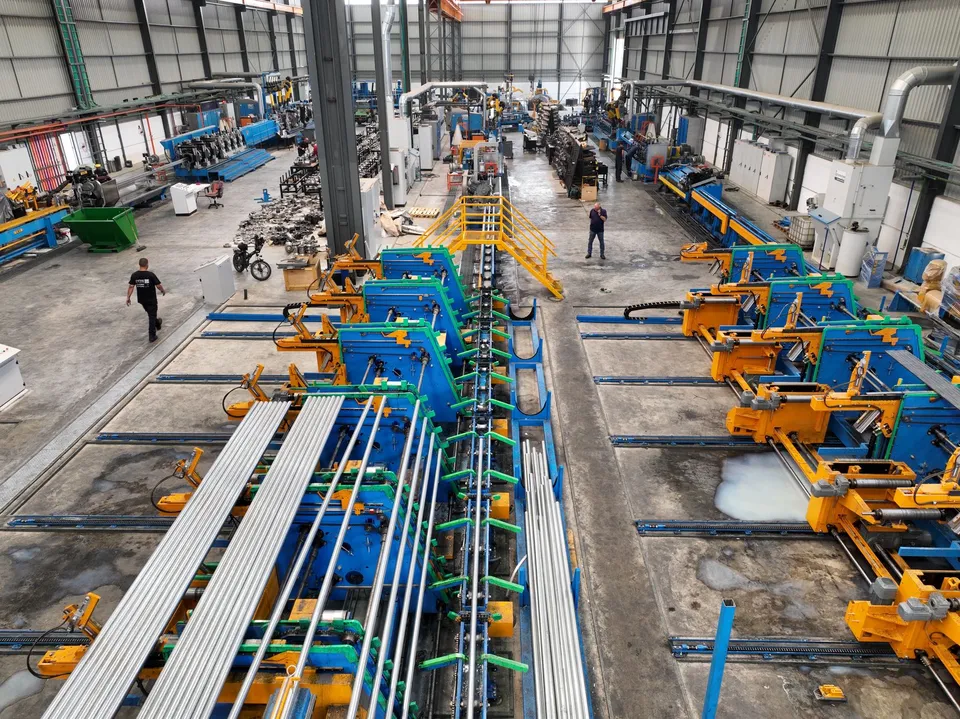
On a production floor, the most expensive minute is often not the one when a machine is running; it is the minute when the run changes. The U.S. Bureau of Labor Statistics separates that work into different jobs: setup workers prepare machines, often produce the first batch, inspect the output, and then hand the machine to an operator, while operators monitor production after the handoff. That difference sounds small until a plant has to decide who changes a program, who verifies the first part, and who is simply responsible for keeping the line moving. BLS’s occupation profile makes that split visible, and it is one reason changeover should be treated as a real industrial skill, not just a pause between orders. (bls.gov)
What changeover really includes
“Changeover” is the work that happens between the last good part on one run and the first good part on the next one. In manufacturing, that can include swapping tooling, loading material, checking settings, updating a CNC program, running a test batch, and confirming that the new output matches the blueprint or spec. BLS notes that CNC setters upload computer control programs, make minor repairs or adjustments, and inspect the first pieces before turning the machine over to production. That is a different job from simply watching the machine during a steady run, and it is different again from the maintenance work that keeps equipment in working order. (bls.gov)
That distinction matters because the most common staffing mistake is to treat every person near the machine as interchangeable. A good operator may notice drift early, but a setter is the person who understands the restart sequence. A maintenance technician may be the right person for a failing bearing, a misaligned conveyor, or a recurring calibration problem. BLS describes industrial machinery mechanics and maintenance workers as people who detect and correct errors before machines or the products they make are damaged, while also calibrating, cleaning, lubricating, repairing, and testing equipment. In other words, the line does not restart well just because more hands are present; it restarts well when the right hand owns the right task. (bls.gov)
Safety defines the boundary
Safety is the reason changeover cannot be improvised. OSHA says set-up, changeover, and dismantling usually have to be performed with equipment deenergized, and if servicing or maintenance happens during normal production and an employee must remove or bypass guarding or enter a hazardous area, lockout/tagout protections apply. That is a crucial management point: the fastest changeover is not the one that skips steps. It is the one that assigns the steps to trained people, in the right sequence, with the right safeguards in place. OSHA’s lockout/tagout rule and its guidance on normal production work both make that boundary clear. (osha.gov)
For employers, that means a changeover plan should be written like a handoff, not a hope. Who powers down? Who changes tooling? Who confirms the first part? Who signs off on restart? Those answers should be consistent enough that a supervisor can audit them on a busy shift and a new employee can learn them without guessing. This is especially important in plants with packaging equipment, conveyors, or computer-controlled machinery, where a small restart error can spread across an entire batch. (bls.gov)
Training should be written, not assumed
The training data make the case for formal instruction. In 2025, the BLS Occupational Requirements Survey found that on-the-job training was required for 89.9% of production workers and that prior work experience was required for 36.6%. That does not mean every worker starts from zero; it means the industry depends heavily on site-specific training, coaching, and repetition. NIST’s Training Within Industry model says Job Instruction standardizes how jobs are taught and helps supervisors train employees to perform work correctly. Put simply, if the plant wants consistent changeovers, it needs consistent teaching. BLS’s production-occupations profile and NIST’s TWI page point in the same direction. (bls.gov)
That is why changeover training should not stop at “watch somebody once.” A better approach names the exact checks that matter on that line: what gets verified before the first piece, what counts as a good handoff, which alarms require maintenance, and which tasks remain outside an operator’s authorization. None of that is glamorous, but it is how a plant avoids confusion between operation, setup, troubleshooting, and maintenance. (bls.gov)
What this means for employers and workers
For employers, the lesson is practical: write the changeover into the job description, the training plan, and the shift handoff. For workers, it is equally useful: ask whether the role is mainly operation, setup, or maintenance, and ask which tasks are expected during a restart. Someone who can already read production instructions, spot a bad first piece, or help document a clean handoff is building a skill that transfers across many industrial settings. Someone who wants to move toward setup or maintenance can focus on mechanical understanding, measurement, and the discipline to follow a defined process every time. (bls.gov)
The best plants do not leave changeover to chance, and they do not pretend that every industrial role is the same. They treat the minutes between runs as a skill set worth training, measuring, and respecting.
If you are reviewing a role or planning a schedule, start with the employers page. Applicants can compare skills and preferences on the job seekers page, or use 218-WorkNow and email the office for a simple next step.