Many industrial jobs look interchangeable from the outside, but the work often breaks into three different questions: Is this the right role? Is the worker trained for this site? Is the worker cleared for this machine or truck? In May 2025, production occupations accounted for 8.57 million jobs with a median annual wage of $51,600, while first-line supervisors of production and operating workers were at $76,600. That spread is a reminder that one title does not describe one kind of work.
1. Job familiarity is not the same as job readiness
Industrial employers often lose time when they treat adjacent experience as if it were complete qualification. Assemblers and fabricators do repeatable build work, machinists set up and operate machine tools and may program equipment, maintenance workers diagnose malfunctions and perform preventive maintenance across several crafts, quality inspectors examine products against specifications, and supervisors plan schedules, assign sequences, and train workers. Those roles overlap, but they are not interchangeable. A person may be strong in one lane and still need help in another.
That distinction matters for both employers and applicants. A warehouse associate may understand pace and material flow, yet still need site-specific training before handling a different truck, a different rack system, or a different load type. A machinist may know setup and measurement but not the exact tolerances, fixtures, or documentation habits of a new plant. A maintenance technician may be broad across electrical, mechanical, and alignment work, but still need time before touching a site’s unique equipment. The safest assumption is not “same industry, same job.” It is “similar work, different boundaries.”
2. Site training is its own clearance
OSHA treats temporary staffing as a shared safety responsibility. Staffing agencies and host employers are jointly responsible for training, hazard communication, and recordkeeping, and the host employer is often best positioned to identify the site’s specific hazards. That means a worker’s general background is helpful, but it does not replace the training tied to the actual floor, line, or machine. In other words, a good résumé is not the same thing as a safe first shift.
That same logic applies to production changes and temporary ramps. OSHA’s guidance says temporary workers are entitled to the same protections as other employees, including when they report injuries or unsafe conditions. For employers, that means onboarding has to be more than a welcome packet. It should answer who trains, who observes, who signs off, and who receives a concern if something looks wrong. For applicants, it means a site should be able to explain what training is required before the first independent shift.
3. Equipment authorization is not a transferable assumption
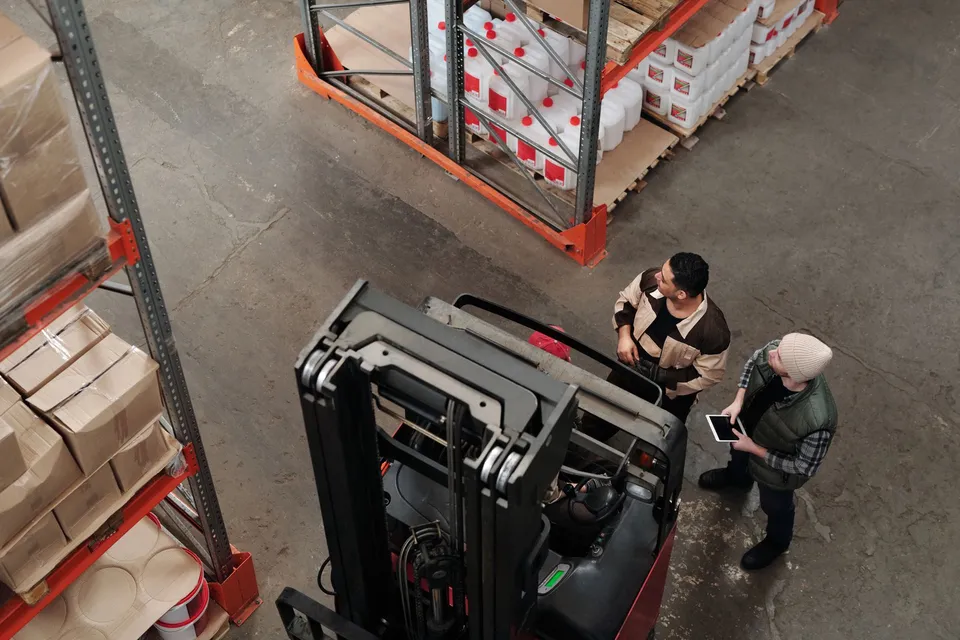
Few industrial issues create more confusion than equipment authorization. OSHA’s powered industrial truck standard requires training and evaluation before operation, and the worker must be evaluated on the actual workplace tasks. That makes forklift authorization different from a general driver’s license and different from simple warehouse familiarity. Being able to move around a facility is not the same as being cleared to operate the equipment that moves product.
This is one reason titles can mislead. A candidate may say, truthfully, that they have worked in a warehouse for years. The next question is still the important one: which truck, which load type, which aisles, which review process, and whose sign-off? The same principle holds for machinists, welders, and maintenance staff. Title matching alone can overstate qualification in one case and understate it in another, because the real issue is not the label but the combination of tools, sequence, and judgment the site requires.
What the three clearances change
When employers separate role fit, site training, and equipment authorization, they make coverage easier to plan and easier to defend. That is especially important because cross-training is useful only when it reduces single points of failure; it is not proof that one worker can safely do every task. In the same way, production supervisors are not just filling hours. Federal job descriptions show that they plan schedules, assign work, inspect materials and equipment, track attendance, and train or delegate training. Good workforce management is really the art of knowing who is ready for what, when, and under which conditions.
For employees, clear boundaries are a benefit, not a burden. Industrial work can involve evenings, nights, weekends, hot environments, repetitive motion, lifting, and fatigue. NIOSH notes that fatigue can reduce reaction time, attention, memory, and judgment, and ergonomics guidance warns about force, repetition, vibration, and awkward postures. When the job is clearly explained, workers can judge whether the shift, pace, and physical demands fit their life and their body before the first day becomes the hard day.
The best industrial hiring question is not “Have you done something like this before?” It is “What exactly have you done, where have you done it, and what have you been cleared to do on this site?” That question protects production, but it also protects people from being set up to fail by a title that promised too much.
If you are hiring or job hunting, compare the role, equipment, shift, and site rules on the employer page or the job-seeker page, or call 218-WorkNow to talk through the next step.