Industrial work has a habit of sounding simpler than it is. A worker may say, “I’ve done this before,” and mean a lot of different things: running a line, setting up a machine, checking parts, moving pallets, or fixing breakdowns. In practice, those are not interchangeable skills. A person can bring real experience to a new plant and still need a site-specific green light before working independently.
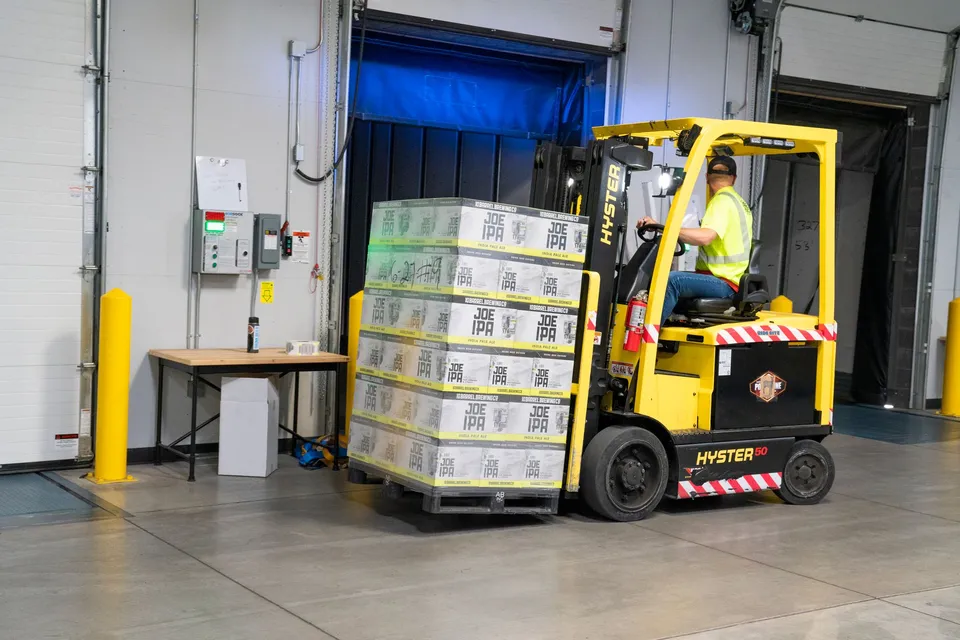
That distinction matters because industrial jobs are built from task boundaries, not just titles. OSHA’s powered industrial truck rules require training and evaluation before operation, and the evaluation must be repeated at least every three years and after refresher training. In other words, prior experience helps, but it does not replace employer authorization on the actual equipment and at the actual site.
Experience is valuable. Authorization is specific.
That is easiest to see with material handling. A warehouse employee may know how to move product safely, but a forklift authorization still depends on the employer’s training and evaluation on that workplace’s trucks, loads, aisles, and hazards. The same logic applies more broadly across industrial work: knowing the general job family is not the same as being cleared for a particular machine, process, or shift environment.
Industrial employers often make better decisions when they separate three questions:
- What has the person done before?
- What can the person do safely and independently here?
- What does the person still need to learn before moving up?
That framework is especially useful because industrial titles hide very different work. Assemblers and fabricators handle repetitive build work. Machinists set up and operate machine tools and may also program equipment. Maintenance technicians and millwrights troubleshoot across mechanical, electrical, and equipment-alignment problems. Quality control inspectors check products against specifications. Leads and supervisors schedule work, train employees, inspect materials and equipment, and resolve attendance or production problems. Those roles overlap, but they are not the same job.
Why the pay range is part of the story
The wage differences are another clue that “industrial experience” is not one thing. In May 2025, production occupations had a median annual wage of $51,600, assemblers and fabricators were at $47,740, machinists at $58,750, industrial machinery mechanics at $64,100, HVAC/R mechanics and installers at $61,010, and first-line supervisors of production and operating workers at $76,600. Welders, cutters, solderers, and brazers were at a $55,100 median annual wage in the detailed May 2024 table.
Those numbers do not just describe pay. They reflect different levels of responsibility, judgment, and authorization. The worker who can keep a line moving is not doing the same job as the person who can diagnose a breakdown, the person who can inspect to spec, or the person who can assign work and correct attendance issues. A better title match often leads to a better wage match, too.
The best promotion path is visible, not guessed
This is where employers can help workers grow instead of simply borrowing them for the next opening. Apprenticeship.gov describes registered apprenticeship as paid work experience with a mentor, progressive wage increases, classroom instruction, and a portable credential. That model is useful even for plants that are not formal apprenticeship sponsors, because it shows what workers usually want from a real career path: structure, proof of skill, and a clear next step.
A good industrial progression plan makes the boundaries visible. For example:
- An assembler may learn quality checks before moving into an inspector role.
- A material handler may earn forklift authorization before taking on broader warehouse duties.
- A maintenance worker may start with routine preventive tasks before moving into troubleshooting.
- A strong operator may become a lead only after proving scheduling, communication, and handoff skills.
That order matters. It keeps employers from assuming that general experience equals full readiness, and it keeps workers from being stuck in roles where they are useful but never fully advanced.
What employers should ask before they say “qualified”
Industrial hiring is stronger when it asks about actual work content instead of just prior employers. A solid screen should include:
- What equipment did the worker actually run?
- Did the worker set up, operate, troubleshoot, or maintain it?
- What tolerances, quality checks, or safety rules were involved?
- Was the work on a line, in a job shop, in a warehouse, or in maintenance?
- What part of the job still requires site-specific training?
That last question is the one many employers skip. It is also the one that prevents avoidable mistakes. A candidate can be promising and still need a short ramp before independent work. When the job description makes that clear, the hire is more likely to last.
What workers should ask before they accept the role
Workers can use the same logic in reverse. Before accepting an industrial job, ask where the job begins and where it ends:
- Is this role mostly operation, setup, troubleshooting, or maintenance?
- What training is required before I can work alone?
- Is the next step an internal progression, cross-training, or apprenticeship?
- Which skills are portable, and which are site-specific?
Those questions are not defensive. They are career-smart. A worker who knows the difference between entry, independent work, and advancement can make a cleaner decision about pay, shift, and future growth.
Industrial work rewards people who learn quickly, but it also rewards organizations that are precise. Experience matters. So does authorization. The strongest hire is the one where both are clear.
If you are hiring or job hunting, start by matching the tasks, the equipment, and the training path—not just the title. You can compare those details on the site’s employer resources and job seeker resources.